
The Palestinian Institute for International Humanitarian Law and Human Rights at the Faculty of Law and Political Sciences, An-Najah National University, in partnership with the United Nations Office of the High Commissioner for Human Rights (OHCHR), organized the first training program for students participating in the University's Model United Nations (MUN), as part of the preparations for the upcoming Human Rights Council simulation.
The training aimed to equip participants with a solid foundation in the United Nations system and the international human rights protection framework. It introduced students to the principal international human rights treaties and conventions, as well as the role of United Nations institutions in the promotion and protection of human rights. In addition, the program provided participants with an initial understanding of the work of the United Nations Human Rights Council in preparation for their participation in the forthcoming simulation.
The training explored the structure, mandate, and working methods of the Human Rights Council, including its regular and special sessions, the Universal Periodic Review (UPR), and the Special Procedures. Participants also learned about the role of the Office of the High Commissioner for Human Rights in supporting the Council's work. Furthermore, students were introduced to the process of drafting, negotiating, and adopting resolutions within the Council, as well as the rules and procedures governing Model Human Rights Council simulations.
The programme was delivered by a distinguished group of experts with extensive experience within the United Nations system, including Mr. Moath Takrouri from Jordan, and Mr. Akram Khalifa and Ms. Nadine Sahouri from the Office of the United Nations High Commissioner for Human Rights in Geneva. The training witnessed a high level of engagement, with participants actively contributing through discussions and questions that reflected their interest in developing their skills in diplomacy, negotiation, and multilateral engagement, while strengthening their understanding of the international human rights system and preparing them for effective participation in the An-Najah Human Rights Council Model.
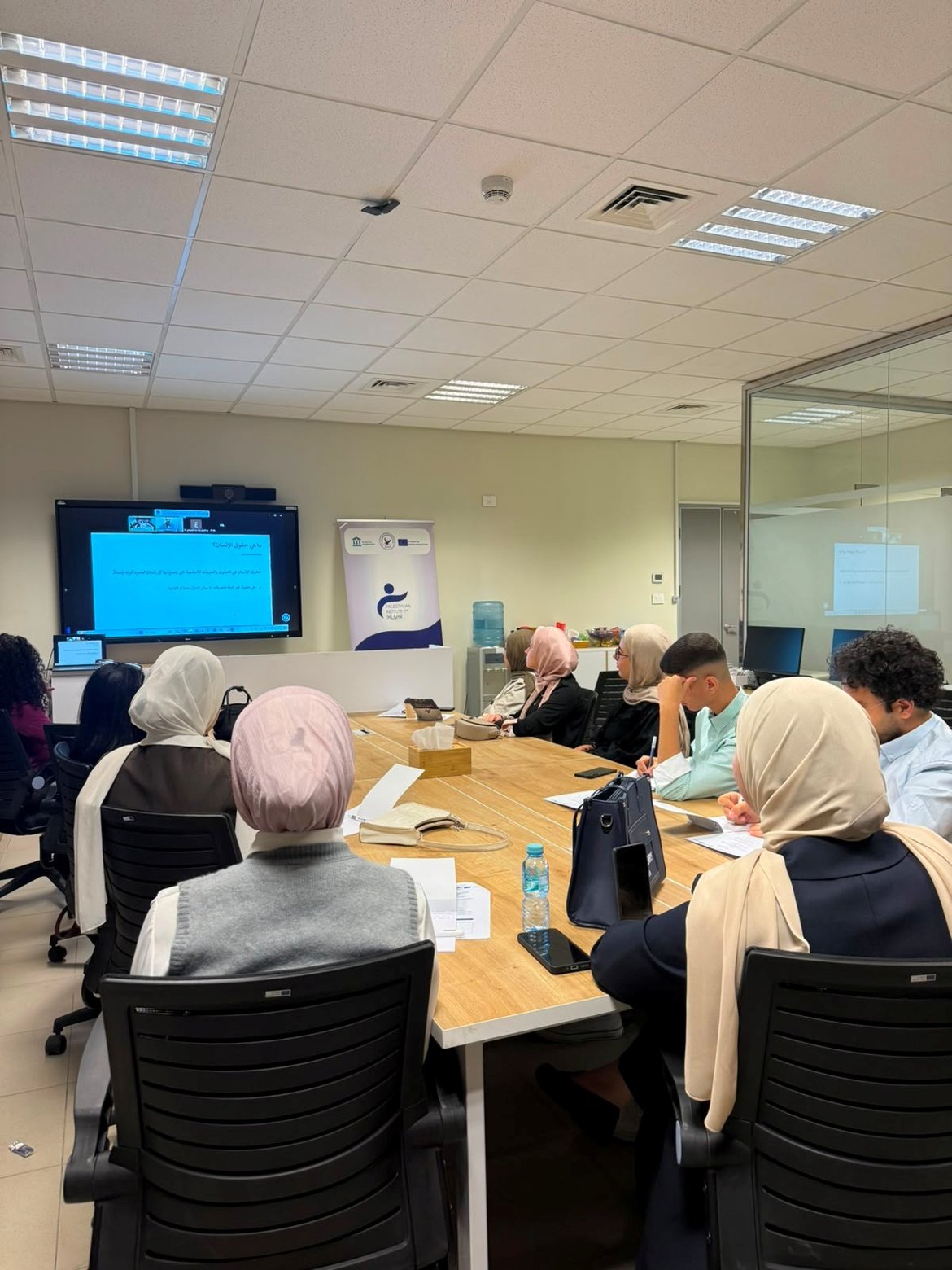
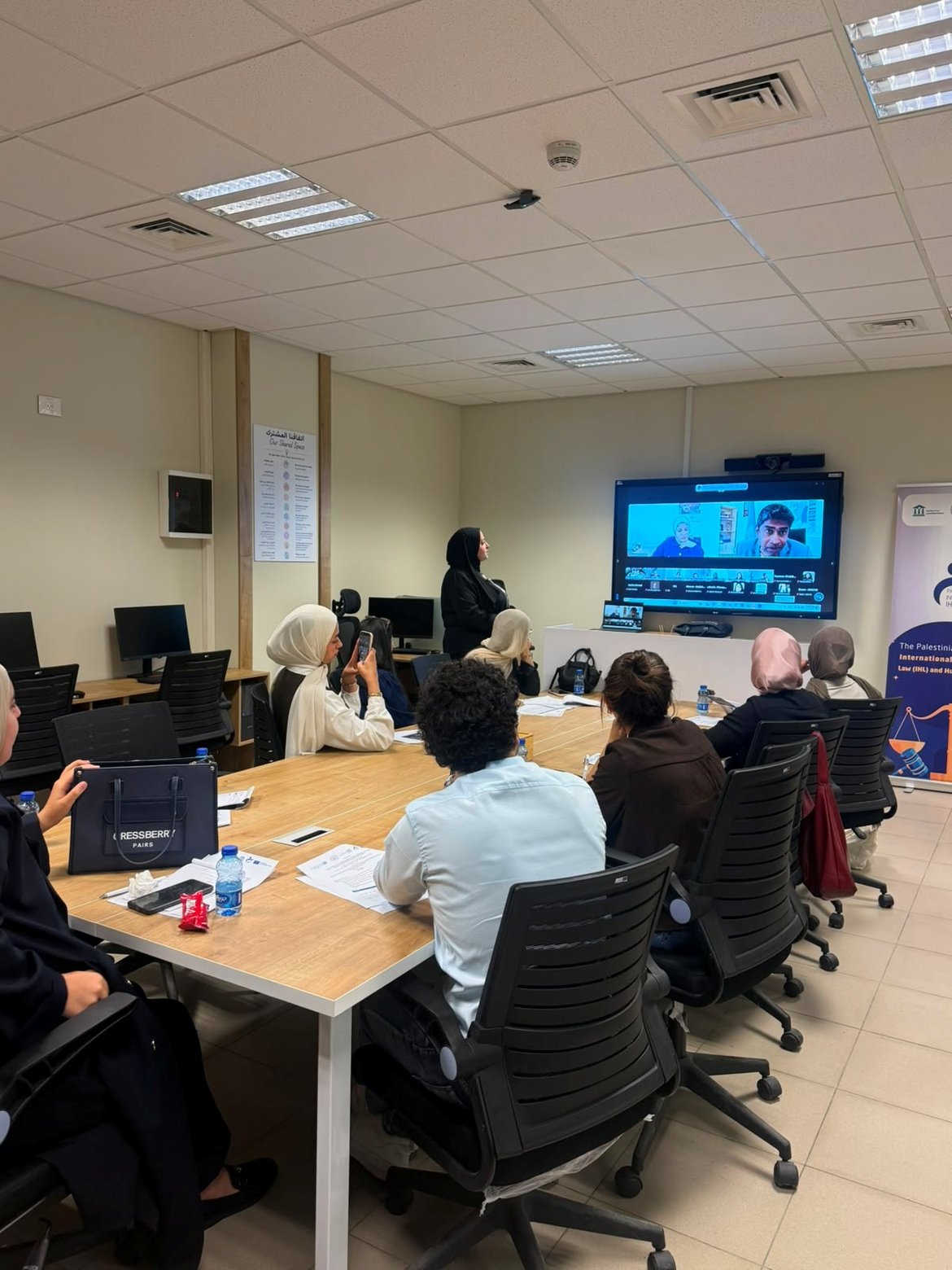
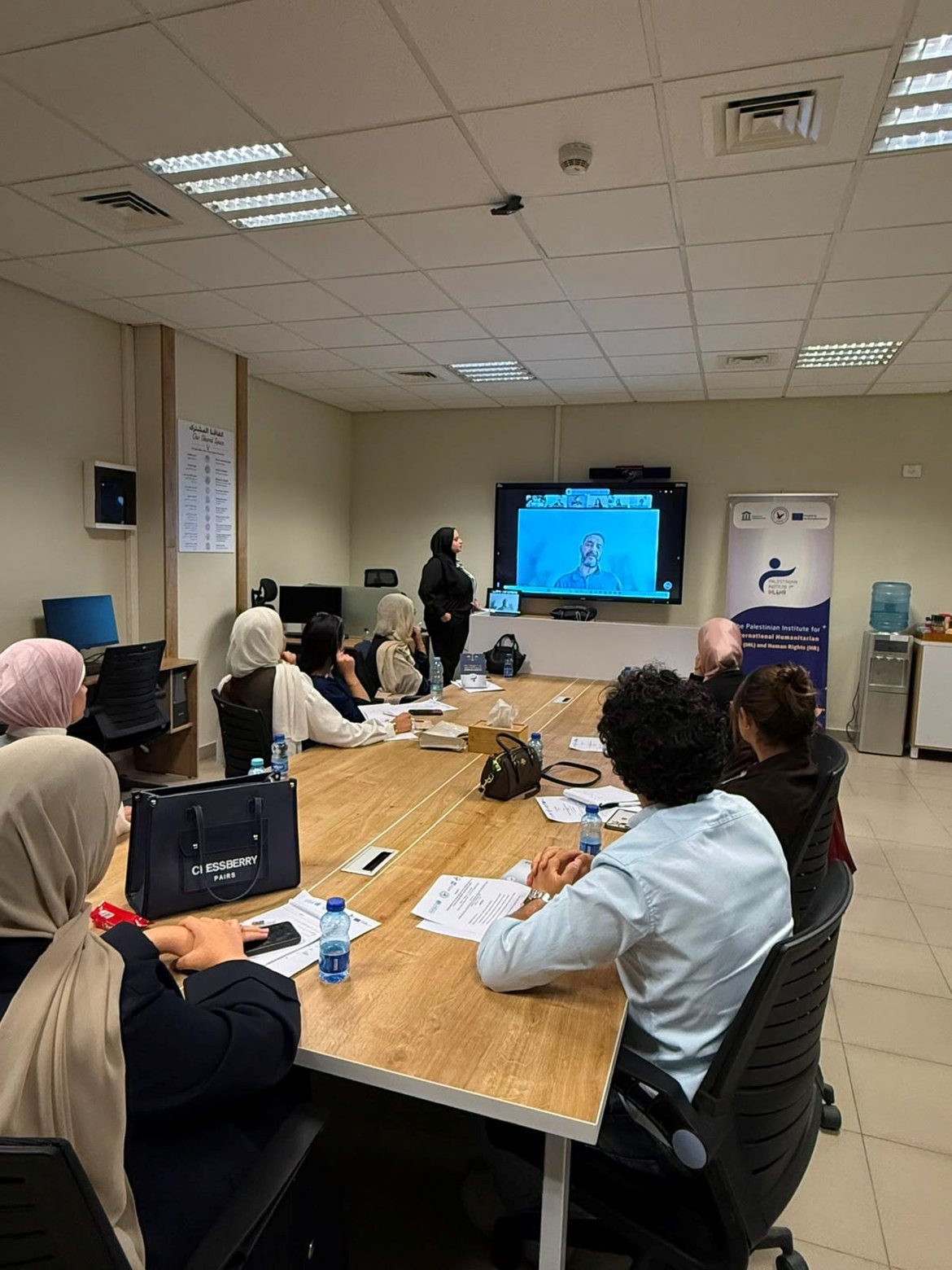
This training forms part of a broader series of activities implemented by the Palestinian Institute for International Humanitarian Law and Human Rights to enhance students' practical skills, deepen their knowledge of international law, human rights, and the relevant United Nations mechanisms, and bridge legal education with practical application and multilateral international engagement. The programme is implemented within the framework of the EU-funded project "Establishment of the Palestinian Institute for International Humanitarian Law and Human Rights."
عدد القراءات: 31